Why nature-based art therapy matters now: insights from the 2025 special issue
Perspectives
InSight – Spring 2026
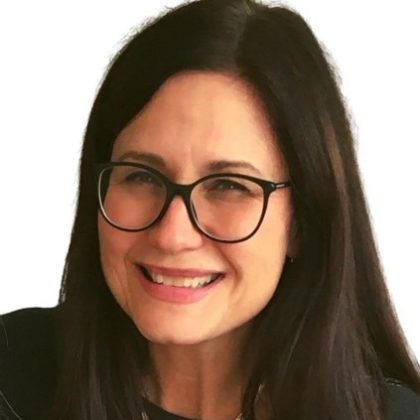
The International Journal of Art Therapy’s 2025 special issue centred on nature-based art therapy. This perspectives interview looks behind the scenes at the ethos, values, and guiding ideas that shaped the editorial curation of Dr Zoe Moula, lecturer in mental health at King’s College London and Editor-in-Chief of the International Journal of Art Therapy, and Dr Pamela Whitaker, lecturer at the Belfast School of Art.

Zoe, why was nature-based art therapy chosen for the 2025 special issue of the International Journal of Art Therapy?
Zoe: In realising the scale and devastating consequences of human-induced climate change and the detrimental effects of human-nature disconnection, we felt it was our responsibility to make this the focus of the 2025 special issue.
Even the fact that we are talking about ‘nature-based art therapy’ implies some kind of disconnection between ourselves and nature. It’s something worth thinking about because when we perceive ourselves as part of Nature, it becomes easy to see that Nature is everywhere.
The title of the special issue was deliberate; we wanted to illustrate that nature-based art therapy is not just about being outdoors and doesn’t need to take place in ‘green’ or ‘blue’ spaces to be considered ‘nature-based’. We really hope this was clear in the special issue with the inclusion of papers and practices taking place indoors, but very much keeping Nature at the heart of the practice.
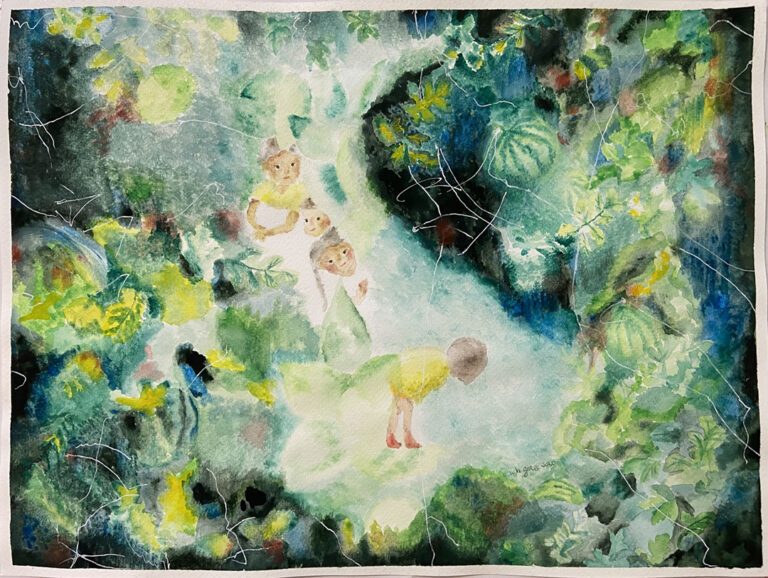
Nature-based art therapy – cover art submissions
How does seeing ourselves as a part of versus separate from nature impact how we research?
Zoe: It changes your whole perspective on what exactly you’re looking for. When you look at research through a more holistic lens, you don’t just look at human health outcomes but start to become more curious about how art therapy might have other environmental outcomes; how people might change their attitudes and behaviours towards nature. You start to consider not just human health, but planetary health as well.
New studies are broadening our perspectives. We are seeing fascinating changes in terms of people respecting nature, more people trying to take environmental action, or building groups for collective action. When we feel closer to nature, we not only prioritise our own health, we also see what we can do for our planet.
Pamela, from your perspective as an art therapist, what unique potential do you see in nature-based art therapy for addressing climate-related distress and eco-anxiety?
Pamela: As an organic gardener I cultivate regenerative landscapes as outdoor studios and public art installations. Over the past year, as a researcher-in-residence at a contemporary art gallery (the Void Art Centre in Derry/Londonderry, Northern Ireland), I collaborated with Action Mental Health, Praxis Care and the North West Migrant’s Forum to produce a biodiversity streetscape composed of herbs, wild plants and cottage-garden flowers. The residency’s slogan was to ‘garden like an artist’ and showcased the ways in which artists decolonise gardening, working to promote expressive and intuitive gardening as a life skill reducing climate anxieties.
Even within environmental art therapy we don’t often think about making nature and regenerating nature. Too often art therapy becomes extractive – we take from nature to make art. I am interested in promoting an ecology of care towards ourselves, communities we serve and civic society in alliance with nature.
I’m less interested in separate ingredients and more in the making of the environment itself as a studio. I call this an ecology of care, for both indoors and outdoors, and bringing the outdoors in. We can go with art therapy participants to the forest, to the seashore, to the garden to create the environment of the studio.
To promote an ecology of care, we need to work more with what is at hand. Working with the lifescape of a person’s life – what they already possess in their home, and the affordances of their locality which offer security in the face of climate uncertainty. We can become designers, curators and guardians of habitats, learning how to build shelter, grow food, compost and work with biodiversity. These skills support climate-related distress and eco-anxiety because they offer agency, shared responsibility, and a long-term commitment to the more-than-human world, rather than leaving people alone with catastrophic images with no means to respond.
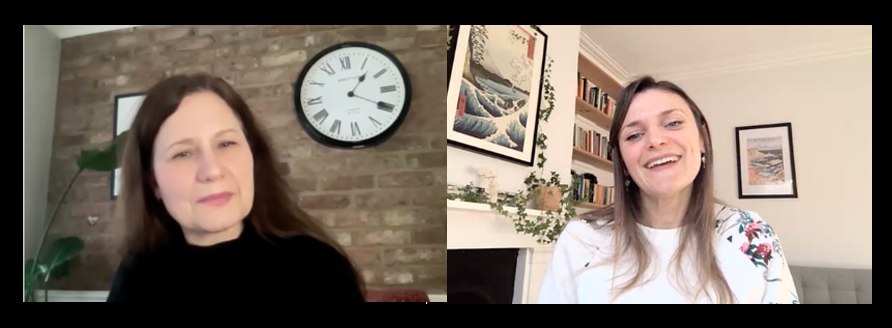
Zoe, what does the evidence tell us about nature-based art therapy, and where do we need more research?
Zoe: As with most aspects of art therapy research, our evidence-base is largely qualitatively driven. This is not a bad thing. There are many ethical, practical, and safeguarding challenges in nature-based art therapy, especially when therapies are delivered outdoors. Art therapy is already a complex intervention and trying to deliver a project at scale without careful consideration of these aspects could cause serious harm.
In the special issue, all six published papers were practice papers, therefore the research-based evidence is very much lacking. What this does mean though is that we don’t yet have the evidence to persuade major funders. However, this is beginning to change with the fast-moving green social prescribing movement.
From my personal experience of applying for funding, it is clear that funders need a more comprehensive understanding of mechanisms of change. They also want a thorough justification of how we can mitigate the risks in nature-based art therapy, such as limitations in confidentiality, accessibility and inclusivity.
To me though, the most important missing element is evidence of long-term benefits. People who participate in nature-based art therapy may go on to become activists, environmental scientists, or take on green jobs. If we had a consistent and thorough way to trace both personal and environmental changes achieved, that would be extremely powerful evidence.
Pamela, the special issue describes practices ranging from gardens to woodlands, working with everyone from toddlers to people with dementia. What gives you hope about where nature-based art therapy is heading?
Pamela: I consider biodiversity gardening as an example of radical care that promotes climate resiliency, food security and companion planting (a method of naturalised horticulture that creates an ecological habitat).
Community gardening facilitates self-efficacy, connection, co-design and co-production. It encourages belonging, pride of place and place attachment. Particularly significant are the ways community gardening reduces isolation and encourages a sense of achievement through regenerative practices that create places to gather and share knowledge.
More broadly, I think of environmental art therapy not only as ‘being outdoors’ but as working with environments: cityscapes, streetscapes, public parks, community gardens and cultural quarters. I work in Belfast, which is a festival city. Festivals mediate divisions in a place still demarcated by peace walls. The cultural quarter next to the Belfast School of Art was developed as a neutral gathering place, a kind of public studio. This gives me hope for nature-based and environmental art therapy practices occupying public spaces, operating within festivals or open studios as support structures for communities which may not feel at home in traditional clinical settings.
I’m also hopeful about structural changes. In Ireland each local authority is now committed to provide land for community gardens, which I see as directly related to food security and ‘food sanctuaries’. I’m inspired by collaborations with occupational therapists, horticulturalists and community artists, and by developments in community art therapy and creative health that foreground events, festivals and psychological first aid in situ.
Each of you approach nature-based art therapy from different vantage points. When you think about the future of art therapy in the context of planetary health, what gives you hope?
Zoe: To deliver nature-based art therapy successfully, requires that you naturally come into contract with professionals across the disciplines of climate psychology, sustainability, ethics, architecture and urban design, among many others. So, your knowledge is constantly expanding, as we see things from different perspectives. What gives me hope is observing the huge amount of energy, passion, commitment, dedication and determination that people across these different disciplines and across the globe put into protecting nature.
I’ve also started to intentionally look for more positive stories. When you know about these programmes and look, you see there are so many positive things happening, such incredible programmes all around the world improving our planet.
Pamela: I am encouraged by art therapists who support homemaking in terms of gardening, cooking, crafting, repairing and repurposing materials that are relevant to life in the making. Public practice art therapy mobilises collective actions and different ways of knowing in response to urgent social concerns (Timm-Bottos, 2017), and gardening is one such method.
I’m also encouraged by collaborations with creative health advocates, socially engaged artists, architects and creative-industry partners interested in care, materials and design. As art therapists we need to be at those tables, bringing our expertise in image-making, materials, trauma-informed practice and ethics. Our art therapy training programme at the Belfast School of Art is now including community art therapy practicums, health promotion events, psychological first aid and place-based health, which is a hopeful response to planetary crisis rather than a retreat from it.
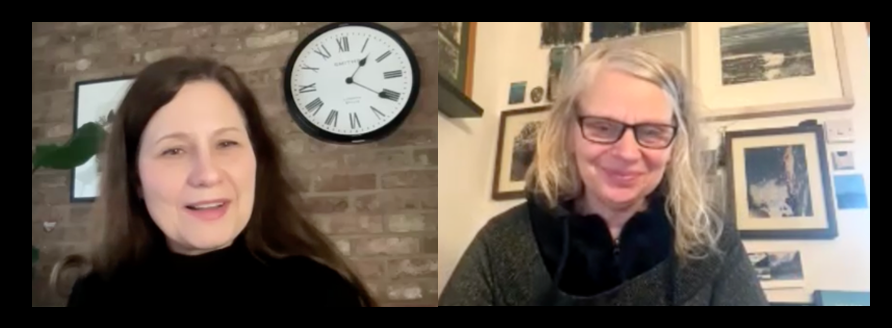
How can art therapists collectively respond to climate distress and ecological loss in ways that also support our own wellbeing as practitioners?
Our wellbeing as practitioners should partner self-care with radical care, re-imagining care as a collective resource. Art therapists can also collectively respond to climate distress by acknowledging the concerns of people who want to make a difference.
This begins with material ethics. As highlighted in Whitaker & McDermid-Thomas (2026) art therapy should rethink its relationship with art media in alignment with urgent calls for climate action. Practically, that means questioning our habits of continually buying new materials. I speak quite bluntly now about stopping the automatic purchasing of art supplies and instead co-producing an ecology of care with participants: asking what materials already live in their homes, workplaces and neighbourhoods; honouring domestic and cultural material practices such as cooking, sewing, mending and gardening; and noticing what people carry as everyday life materials.
Working with home studios, walking studios and community gardens allows clients and therapists to co-create installations and gathering points that mark belonging and attention restoration. These are life studios which support both client recovery and practitioner wellbeing because they are rooted in everyday practices, mutual aid and pride of place, rather than in isolated, illness-oriented models.
Zoe: We often take it for granted that we’re not directly affected by climate change, but there is no way to be unaffected.
In my current fellowship working with the Research Institute for Humanity and Nature in Japan, I was delivering creative therapeutic sessions and it was interesting that it wasn’t until things started coming out through their drawings, that people recognised how worried they are feeling about the environment, their deep sense of grief, anxiety, and distress.
The mental health impacts of climate change are now crystal clear. The more you work in this area, the more easily you can start to experience what is often described as climate anxiety or eco-anxiety, eco-distress and eco-grief. These are signs of deep care for nature, so the point is not to eliminate such emotions, but to learn how to manage them more productively.
This is a heavy weight to carry that needs to be shared, expressed, released. Working in/with Nature also brings up existential issues, such as death, change, and impermanence, so it is important to have people we can discuss these feelings with. The BAAT special interest group on Nature-based practice and climate change is another excellent example of a support system that is already in place. In every meeting we create art, which helps with expressing things we cannot possibly have the right words for. I encourage you to join us.
Join the nature-based special interest group
If you’re one of our members, you can join the special interest group on nature-based art therapy and climate change. Look for them in the forums!
Read the special issue on nature-based art therapy
References
Timm-Bottos, J. (2017), Public practice art therapy, Canadian Art Therapy Association Journal, 30(2), 94-99.
Whitaker, P., & McDermid-Thomas, A. (2026), The material culture of art therapy: Less is more, Art Therapy: Journal of the American Art Therapy Association, 1-6.