Working as a Trust-wide lead for arts psychotherapies in the NHS
Spotlight
InSight – Spring 2026
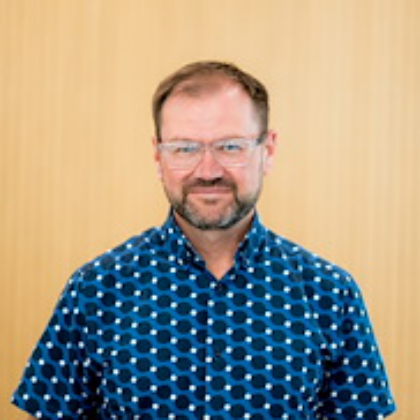
Spotlight is our regular series dedicated to shedding light on the roles of art therapists within different contexts. In this article, Dr Simon Hackett tells us about his work as a Trust-wide lead in the NHS.
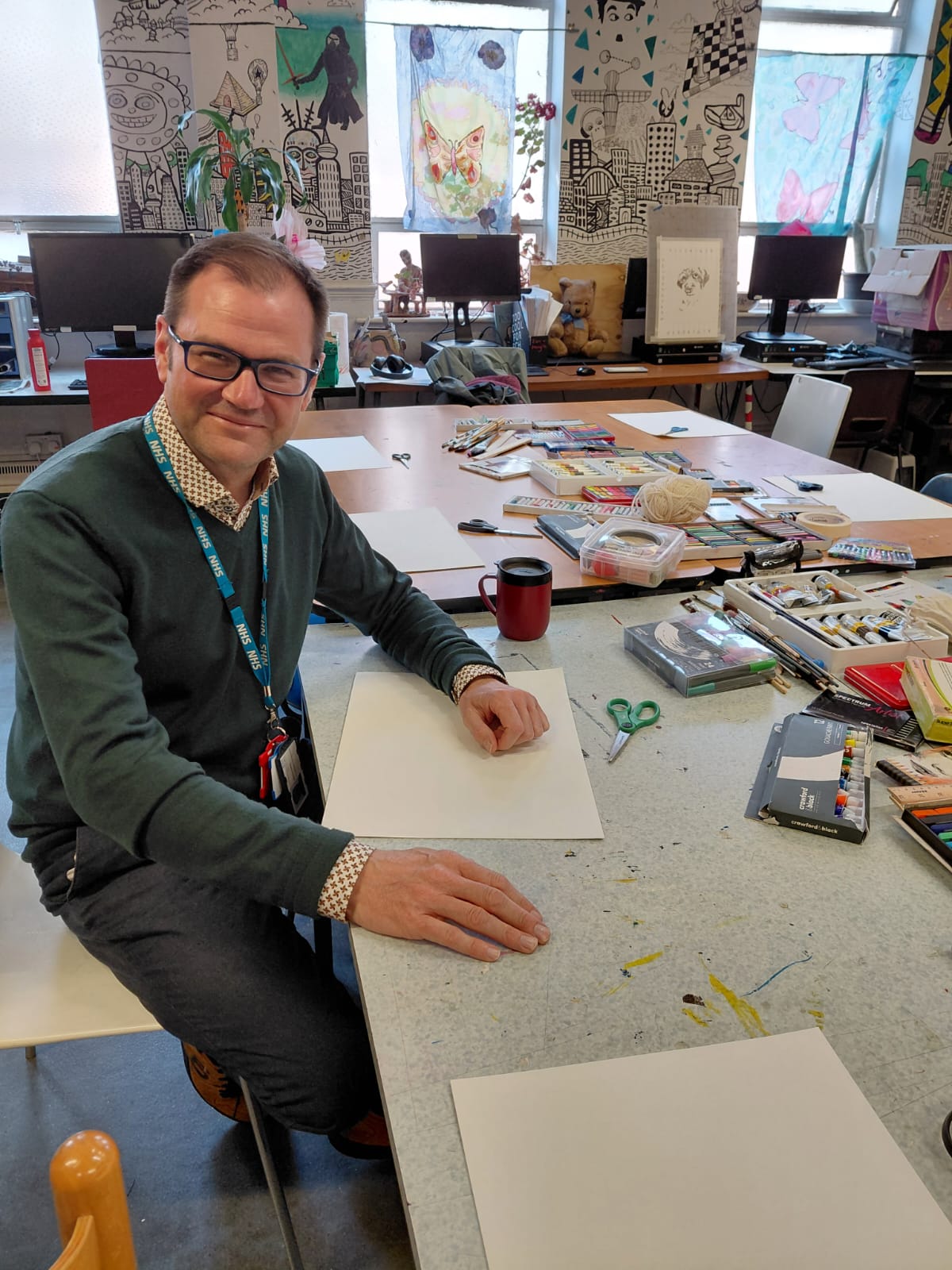
Who I am
Before I trained as an art therapist, I studied Fine Art at college and, if I am completely honest, I started out with a very modernist dream of being a solitary artist, quietly making art every day in an abandoned warehouse for the rest of my life. But I had one problem with this idea: I loved working with people too. Then someone told me about this thing called art therapy. Something clicked. More than 25 years later, it still does.
Where I work
I work at Cumbria, Northumberland, Tyne & Wear NHS Foundation Trust, which provides mental health and disability services right across the north of England, from the east coast to the west coast. The Trust employs art, music, drama, and dance movement therapists, and we are really proud to have a number of art psychotherapy apprentices.
My clinical background is in working with people who have a learning disability and in NHS Secure Care services, which supports people who have been in contact with the criminal justice system and have mental health difficulties or a disability that means their needs can be better met in a hospital setting.
Getting here
Over the years I have taken on a range of roles: manager, head of service, associate director, trust-wide lead for arts therapies, clinical academic, and consultant. But as far as I am concerned, I am still that naïve kid in art college with a drive to create things even when nobody was asking me to. If something is not clear, I am never afraid to just step out, give it a go, and approach it creatively to find a way through.
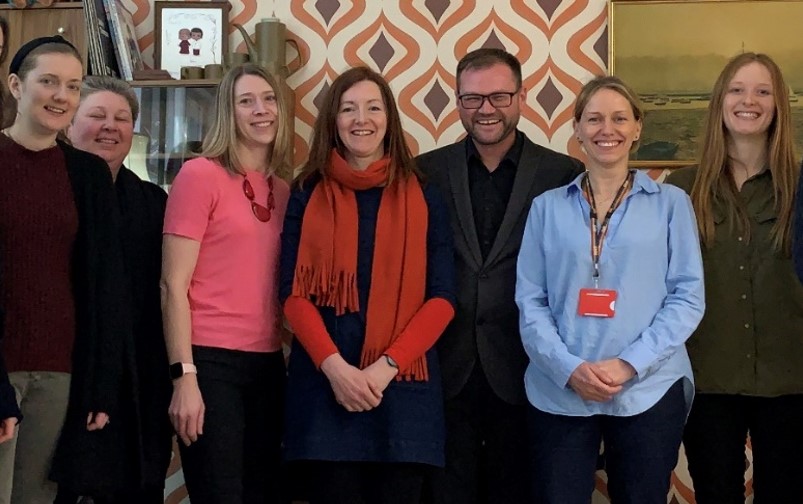
What has steered me, alongside a fair amount of luck, is people. I have worked with some remarkable patients and colleagues over the years, and some of my arts therapy colleagues have been part of my working life for over twenty years. But I feel just as inspired meeting our new apprentices at the very start of their training. We got together in person recently and I left genuinely heartened that our profession is in such good hands.
Seeing patients remains one of the most rewarding parts of my role, and I have deliberately kept it in my working week throughout my career.
A typical day
I do not think I have a typical day anymore, and that is part of what I enjoy. Recently I spent a morning on organisational work approving expenses, reviewing documents, responding to emails, and the afternoon providing art therapy in our forensic outpatient clinic. Another day I might facilitate a reflective practice session with our psychology team, supervise therapists and apprentices, or spend time at the university supporting health and care professional internships and writing up research.
At the moment I am also involved in co-production work with art therapists and people with mental health lived experience, developing a project about art therapy on inpatient mental health wards. One moment I am thinking strategically about service development, the next I am problem-solving with a colleague, then working directly with a patient or attending a senior leadership meeting on workforce planning. But the question I try to hold across all of it is: what is going to give the best experience and outcomes for the people using our services?
What I love about what I do
Seeing patients remains one of the most rewarding parts of my role, and I have deliberately kept it in my working week throughout my career. It keeps me grounded in the reason I became an art therapist, and it gives meaning to everything else I do.
Something I did not fully anticipate is how much of a leadership role involves helping different parts of the organisation understand what arts therapies can offer and why they matter. But it is a case worth making. What I have noticed over many years is that when an arts therapist starts working somewhere new and other staff can see what they do and how people respond, requests for more almost always follow. Where there is no arts therapist in a service, people are often unaware of what arts therapists can offer. A trust-wide lead can bridge that gap, making the case, connecting services, and ensuring arts therapies are visible where decisions about workforce and investment are made.
Being caring and compassionate, respectful, honest and transparent are not just organisational commitments for me – they are personal ones.
How I look after myself
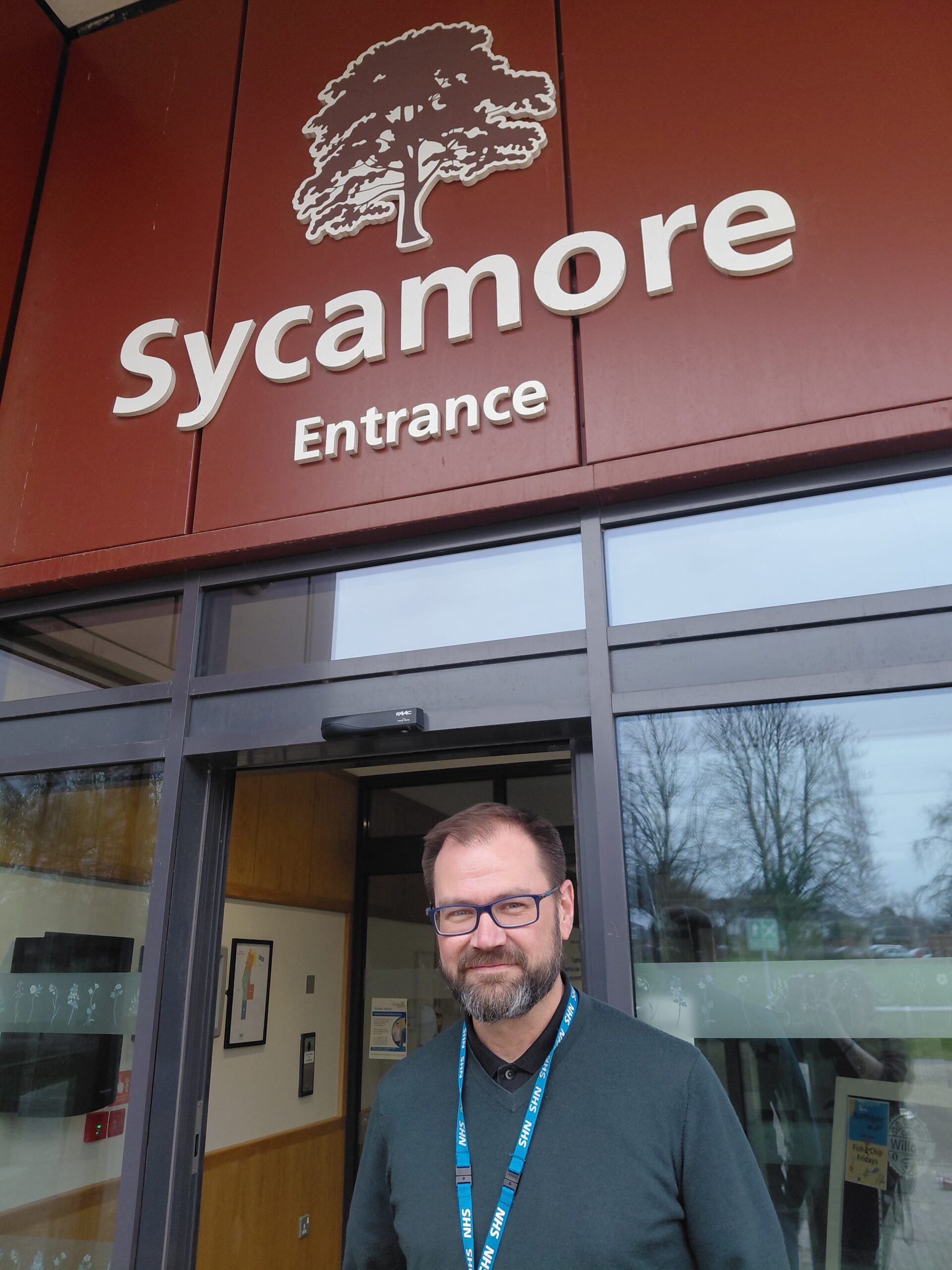
I have learnt that looking after myself in my role starts with looking after myself outside it. Making space for family, for exercise, and for the things I enjoy has made a real difference. I value supervision, support from my managers, and mentors who have been generous with their time. And keeping my clinical practice going is a constant reminder of why all the strategic work is worth doing.
What I wish I had known when I started
Two things stand out. First, that you cannot communicate the value of arts therapies once and consider the job done. Staff and services change, and the message needs to be repeated. The more visible and well-evidenced our work is, the stronger the case becomes.
Second, that the sustainability of any health service is fundamentally about the people who deliver it. Investing in people across their careers, through challenges, periods of illness, burnout prevention, and opportunities for growth, is something I have tried to prioritise, and I regularly encourage colleagues to think about how they sustain their own good practice.
Moving forward
There are exciting arts therapy projects, services, and apprenticeships developing across the trust, and my focus now is on using my organisational knowledge to help others navigate towards their goals, whether that is a clinical project, a research idea, or a career opportunity.
Underpinning all of this is something I feel strongly about: values matter in leadership, and they matter most when things are difficult. Being caring and compassionate, respectful, honest and transparent are not just organisational commitments for me – they are personal ones. I hope to do more to grow the evidence base for arts therapy, so that good practice reaches more of the people who need it.
Clinical leadership training for therapists

Read more
You might also be interested in reading these articles by Simon from InSight and our academic journal the International Journal of Art Therapy (IJAT):
- Breaking barriers: opening research pathways for art therapists, InSight, (2025)
- Art therapy research and learning disabilities, InSight, (2024)
- Primary school mentalisation-based art therapy (Primary-smART): a Person-Based Approach optimisation study, IJAT, (2024)
- Art therapy in acute inpatient care IJAT, (2023)
- Developing art therapy practice within perinatal parent-infant mental health IJAT, (2020)
- UK art therapy practice-based guidelines for children and adults with learning disabilities, IJAT, (2017)