Art therapy and mentalisation
Hot topic
InSight – Winter 2025

In this hot topics article looking at developments in art therapy, Alex McDonald and Samantha Chilvers share their work on mentalisation-based art therapy, a growing approach that’s showing promising results with both children and adults.
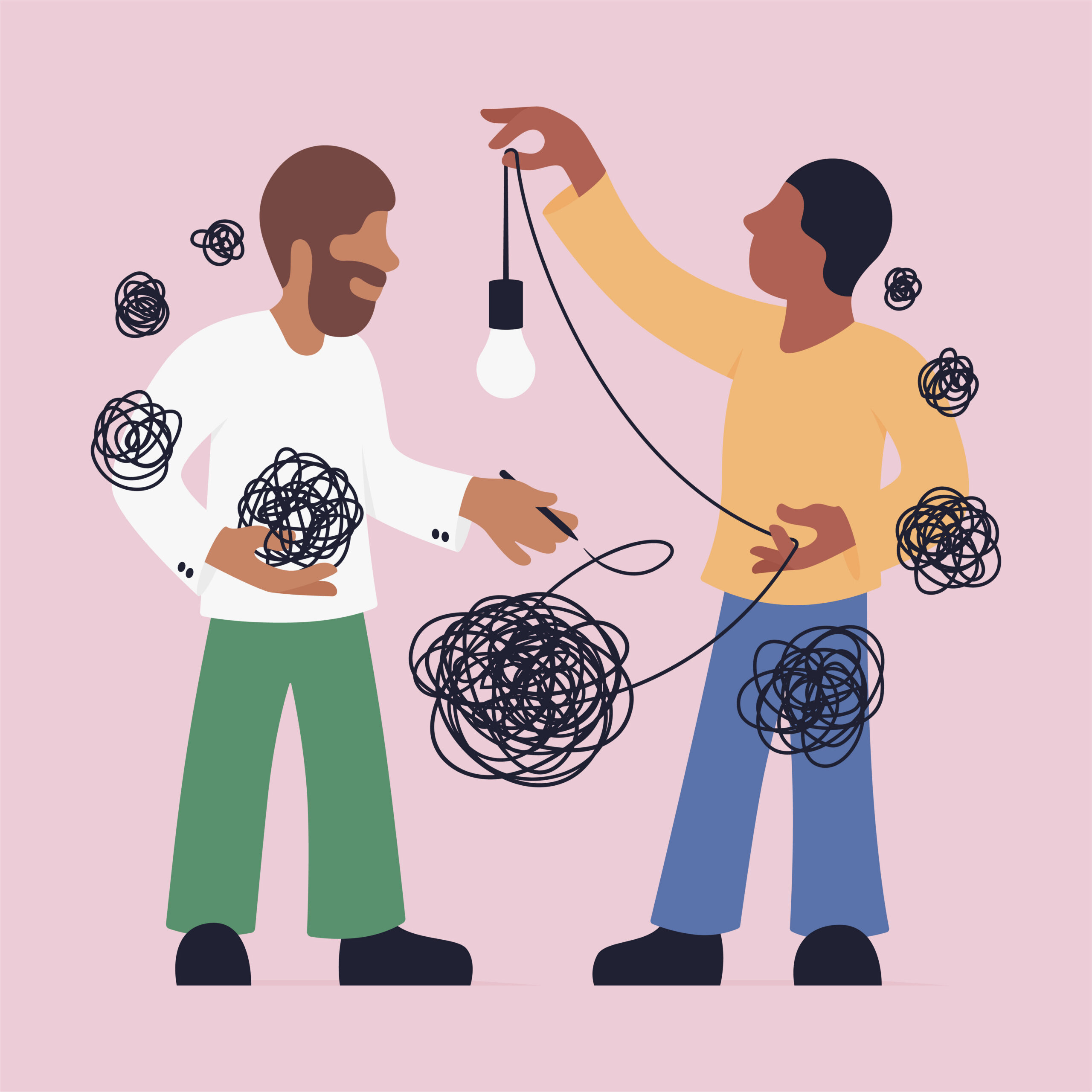
What is mentalisation?
What happens when someone can’t put overwhelming feelings into words? As art therapists witness daily, this is an ongoing reality for many children and adults, particularly those who’ve experienced trauma. Mentalisation-based art therapy provides a bridge, using artmaking as a safe way to explore and understand complex mental states.
Mentalisation is our ability to understand what’s happening in our own minds and in the minds of others. Most people recognise moments when this capacity diminishes. For example, if we’ve ever been really upset and can’t think straight, or when we completely misread someone else’s intentions. For some people, this happens frequently and can make relationships and daily life incredibly difficult.
Mentalisation is our ability to understand what’s happening in our own minds and in the minds of others.
A French psychoanalyst called Pierre Marty first wrote about the concept of mentalisation in the 1960s (Marty, 1991). However, the work of Peter Fonagy, Anthony Bateman, and Margaret Target led to our current understanding of mentalisation. Their work aimed to develop our understanding of processes of change in child psychoanalysis (Fonagy & Target, 1998) and mentalisation-based treatment for adults living with complex emotional needs, often described by services as a diagnosis of ‘borderline personality disorder’ (Bateman & Fonagy, 2004).
Mentalisation-based treatment is now a well-evidenced manualised adult therapy (Malda-Castillo et al., 2019), with the first trial currently under way with children (Midgley et al., 2023). Mentalisation-based treatment has had a transformative impact on clinical practice worldwide, with nearly 15,000 practitioners in 22 countries now using mentalisation-based approaches to support better mental health for adults and children (University College London, 2024).
What is mentalisation-based art therapy?
Mentalisation-based art therapy combines art therapy with mentalisation-based treatment principles in a structured, evidence-based approach. Combining mentalisation principles with artmaking can help clients externalise emotions and mental states.
Unlike some traditional approaches to art therapy that have been referred to as ‘non-directive’ where the therapist might take a more passive stance (McNeilly, 1983), this approach is actively collaborative. The art therapist and client work together using artwork to think about thoughts and feelings.
Bringing mentalisation-based treatment and art therapy together has been publicly supported by Peter Fonagy:
Art therapy… invariably places the individual in relation to another, the creation of his or her imagination. There is something in this relationship between the experiencing self and the self as a product of experience which is replicated in art therapy and may have much to teach us about not only how we become ill and get better, but also who we are.
Fonagy, 2012
Over the past twenty years, the literature on mentalisation-based art therapy has been growing. Neil Springham has been a pioneer in this field, developing foundational work with adults that has influenced practice across the profession (Springham et al., 2012, 2014, 2017, 2018; Springham, 2019) Developments include practice with adults (Franks & Whitaker, 2007; Havsteen-Franklin & Camarena Altamirano, 2015; Thorne, 2016; Chilvers et al., 2021; Schwaiger & Williamson, 2021) and more recently with children and young people (Moore & Marder, 2019; McDonald et al., 2024), alongside general frameworks for practice (Havsteen-Franklin, 2016, 2019) and theoretical development (Czamanski-Cohen & Weihs, 2016; Verfaille, 2016; Springham & Huet, 2018; McDonald, 2022).
Within art therapy, mentalisation theory has been further developed through two key frameworks. The bodymind model (Czamanski-Cohen & Weihs, 2016) explains how artmaking and creative expression makes internal states visible and discussable. The ostensive communication theory of art therapy (Springham & Huet, 2018) describes how therapists use deliberate, marked communication, including through art, to signal intention and invite joint attention.
Why mentalisation-based art therapy is relevant today
Many people struggle to pause and think when emotions run high. Whether it’s children becoming overwhelmed in classrooms or adults finding their relationships breaking down, responding to stress by ‘acting out’ rather than ‘thinking through’ is a common challenge. Recent studies also suggest that childhood maltreatment is associated with lower mentalising capacity (Yang & Huang, 2024).
For children, mentalisation-based art therapy fills a crucial gap. Many young people struggle to articulate complex feelings into words, especially those who’ve experienced difficult life events. Children can also become overwhelmed by the very act of discussing their emotions. Art offers a familiar, non-threatening medium that children naturally engage with.
The approach recognises that intense emotions can temporarily overwhelm our thinking and provides practical tools for developing the ability to step back and consider what’s happening internally.
There is growing recognition of the need for therapeutic support in educational settings, with art therapists increasingly working in schools. However, until recently there weren’t many structured, evidence-based approaches specifically designed for this context.
For adults living with complex emotional needs, the combination of emotional expression through art and structured reflection offers a meaningful opportunity to see things from different perspectives. The approach recognises that intense emotions can temporarily overwhelm our thinking and provides practical tools for developing the ability to step back and consider what’s happening internally. Developing these reflective skills can support emotional wellbeing when navigating life’s challenges.
Mentalisation-based art therapy in different contexts
The approach has now been adapted for different populations and settings.
Alex’s research focuses on art therapy with primary school children experiencing social, emotional and mental health difficulties (McDonald & Drey, 2018; McDonald et al., 2019; McDonald & Holttum, 2020; McDonald, 2022; McDonald et al., 2024). Recognising that children’s capacity to mentalise is still developing, sessions combine artmaking with structured elements like ‘detective work’, where the child and art therapist look for clues about thoughts and feelings in the artworks, and use child-friendly tools like art therapy journals.
Samantha runs mentalisation-based art therapy groups in NHS settings for adults with complex emotional needs. Her groups provide what participants describe as a ‘training ground’ for practising mentalising skills in a supportive environment where intense emotions can be explored safely and with curiosity (Chilvers et al., 2021).
What makes both approaches distinct is the active, structured framework. Rather than waiting for insights to emerge, therapists actively use specific techniques, photography, journalling and collaborative reflection to help people develop practical skills to better understand their own and others’ thoughts, feelings and intentions. Art therapists are well positioned for this work, already practised at helping people to use creative means to express what may feel inexpressible.
How mentalisation-based art therapy can help – what children, teachers and adults say
Across different settings and age groups, mentalisation-based art therapy is making a difference to people’s lives.
Teachers describe how mentalisation-based art therapy helped children develop their confidence and capacity to understand and manage their emotions:
Children […] have developed their confidence in the classroom […] these are skills they have picked up through talking about their [art]work with [the art therapist].
Teacher 9, McDonald et al., 2019
[The art therapist] will say ‘is your heart beating really hard?’ and then she’ll give her a way of understanding what’s directly going on […] I can then use those same strategies or ideas in class.
Teacher 1, McDonald et al., 2019
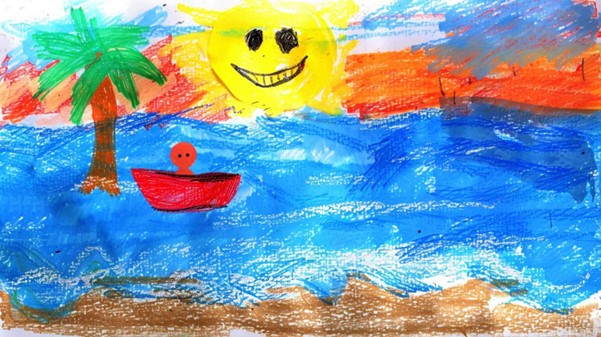
Children in primary schools describe how mentalisation-based art therapy helped them feel safer and calmer:
Art therapy helps with stress! When you make art, it can take your mind off the bad stuff. This can help you feel safer.
Child, age 10, McDonald et al., 2019
Art therapy helps children be calm and think well by talking about what has happened and showing their feelings by making art.
Child, age 11, McDonald et al., 2019
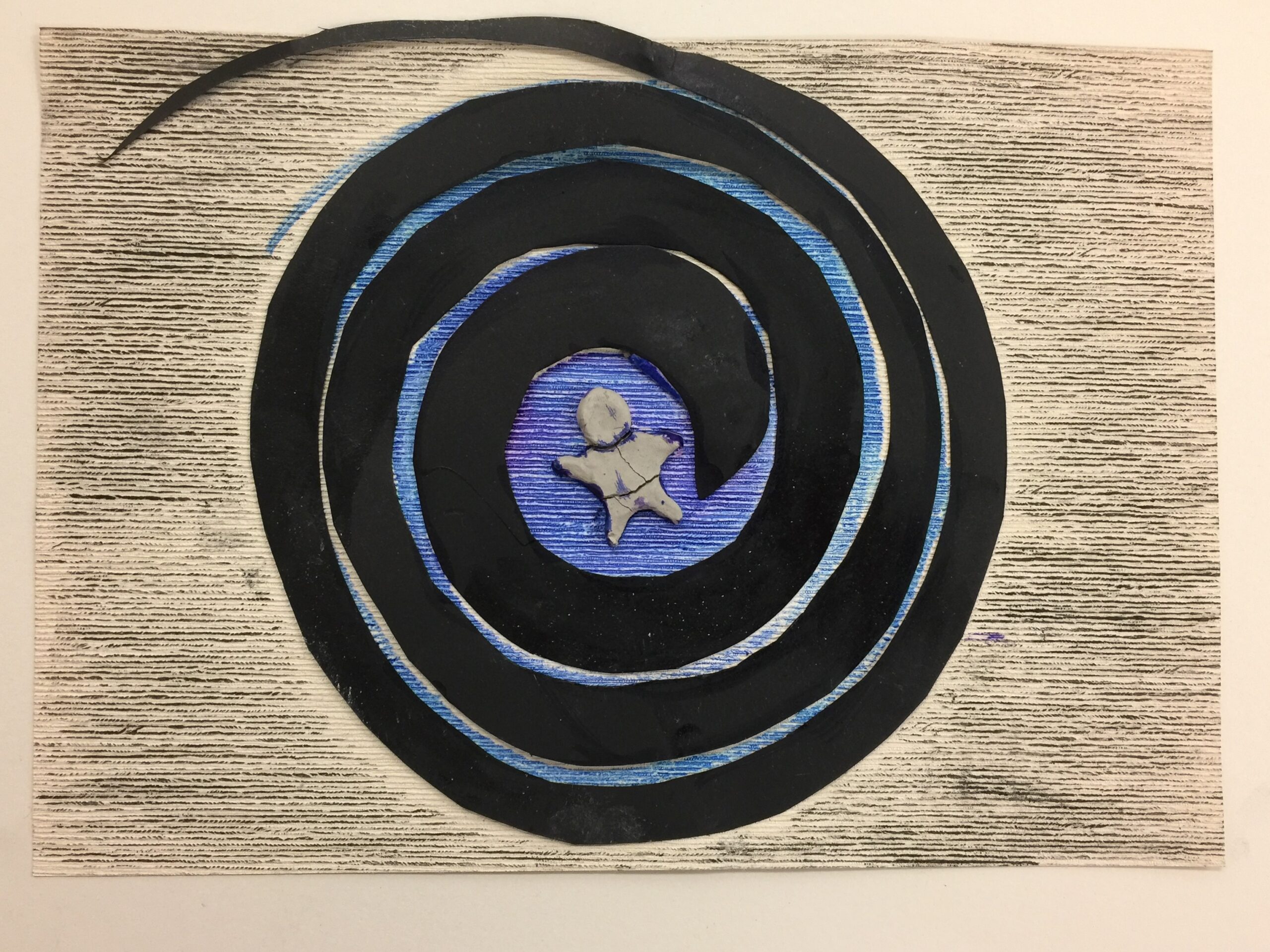
Adults in mental health services describe how mentalisation-based art therapy helped them make life-changing shifts in their capacity to express themselves and think things through:
Through the artwork, I was able to express myself and show how I was actually feeling, and it gave me a means to do that.
'Sarah', adult participant, Chilvers et al., 2021
I’m able to think things through. I challenge myself more.
'Ray', adult participant, Chilvers et al., 2021
Moving forward
Mentalisation-based art therapy is showing promising results across different settings. By combining artmaking with structured approaches to understanding mental states, it offers people, whether children or adults, practical pathways to better understand themselves and others, manage difficult emotions, and build stronger relationships.
For art therapists, while the evidence-base is growing, it provides frameworks that are both theoretically grounded and creatively flexible, adapting to different contexts while maintaining the creative heart of art therapy.
Learn more in our self-study course

References
Bateman, A., & Fonagy, P. (2004). Psychotherapy for borderline personality disorder: Mentalization-based treatment. Oxford University Press.
Chilvers, S., Chesterman, N., & Lim, A. (2021). ‘Life is easier now’: lived experience research into mentalization-based art psychotherapy. International Journal of Art Therapy
Czamanski-Cohen, J., & Weihs, K. L. (2016). The bodymind model: A platform for studying the mechanisms of change induced by art therapy. The Arts in Psychotherapy
Fonagy, P. (2012). Art Therapy and Personality Disorder International Journal of Art Therapy
Fonagy, P., & Target, M. (1998). Mentalization and the changing aims of child psychoanalysis, Psychoanalytic Dialogues
Franks, M., & Whitaker, R. (2007). The image, mentalisation and group art psychotherapy, International Journal of Art Therapy
Havsteen-Franklin, D. (2016). Mentalization-based art psychotherapy. In J. A. Rubin (Ed.), Approaches to Art Therapy (3rd ed., pp. 144-163). Routledge
Havsteen-Franklin, D. (2019). Mentalization-based creative arts therapies. In A. W. Bateman & P. Fonagy (Eds.), Handbook of mentalizing in mental health practice (2nd ed., pp. 197-212). American Psychiatric Association Publishing.
Havsteen-Franklin, D., & Camarena Altamirano, J. (2015). Containing the uncontainable: Responsive art making in art therapy as a method to facilitate mentalization, International Journal of Art Therapy
Malda-Castillo, J., Browne, C., & Perez-Algorta, G. (2019). Mentalization-based treatment and its evidence-base status: A systematic literature review, Psychology and Psychotherapy: Theory, Research and Practice
Marty, P. (1991). Mentalisation et psychosomatique. Laboratoire Delagrange.
McDonald, A. (2022). Art therapy for children following adverse childhood experiences: An intervention development study. The Arts in Psychotherapy
McDonald, A., & Drey, N. S. J. (2018). Primary-school-based art therapy: a review of controlled studies. International Journal of Art Therapy: Inscape
McDonald, A., & Holttum, S. (2020). Primary-school-based art therapy: A mixed methods comparison study on children’s classroom learning, International Journal of Art Therapy
McDonald, A., Holttum, S., & Drey, N. S. J. (2019). Primary-school-based art therapy: Exploratory study of changes in children’s social, emotional and mental health International Journal of Art Therapy
McDonald, A., Kavermann, S., Holttum, S., Lloyd, B., Zubala, A., Bourne, J., & Hackett, S. S. (2024). Primary school mentalisation-based art therapy (Primary-smART): A Person-Based Approach optimisation study, International Journal of Art Therapy
McNeilly, G. (1983). Directive and non-directive approaches in art therapy The Arts in Psychotherapy
Midgley, N., Mortimer, R., Carter, M., Casey, P., Coffman, L., Edbrooke-Childs, J., Edridge, C., Fonagy, P., Gomes, M., Kapoor, A., Marks, S., Martin, P., Moltrecht, B., Morris, E., Pokorna, N., & McFarquhar, T. (2023). Emotion regulation in children (ERiC): A protocol for a randomised clinical trial to evaluate the clinical and cost effectiveness of Mentalization Based Treatment (MBT) vs Treatment as Usual for school-age children with mixed emotional and behavioural difficulties, PLOS ONE
Moore, K., & Marder, K. (2019). Mentalizing in group art therapy: Interventions for emerging adults. Jessica Kingsley Publishers.
Schwaiger, T., & Williamson, E. (2021). The art of mentalizing: A mentalization-based art initiative with homeless people within a psychologically informed environment, The Arts in Psychotherapy
Springham, N. (2019). Mentalisation-based art therapy with personality disorder. In A. W. Bateman & P. Fonagy (Eds.), Handbook of mentalizing in mental health practice (2nd ed., pp. 181-195). American Psychiatric Association Publishing.
Springham, N., & Camic, P. M. (2017). Observing mentalizing art therapy groups for people diagnosed with borderline personality disorder, International Journal of Art Therapy
Springham, N., Findlay, D., Woods, A., & Harris, J. (2012). How can art therapy contribute to mentalization in borderline personality disorder? International Journal of Art Therapy
Springham, N., & Huet, V. (2018). Art as Relational Encounter: An Ostensive Communication Theory of Art Therapy, Art Therapy
Springham, N., Thorne, D., & Brooker, J. (2014). Softer: Looking for oxytocin in art therapy, International Journal of Art Therapy
Thorne, D. (2016). Portrait of self and other: Developing a mentalization-focused approach to art therapy within a personality disorder service. In V. Huet (Ed.), Time-Limited Art Psychotherapy (pp. 92-118). Routledge.
University College London. (2024). UCL-developed Mentalisation Based Therapy helps transform mental health practice
Verfaille, M. (2016). Mentalizing in arts therapies. Karnac Books.
Yang, L., & Huang, M. (2024). Childhood maltreatment and mentalizing capacity: A meta-analysis. Child Abuse & Neglect