Supporting the people who care for others: promising research into art therapy and clinical burnout
Article
InSight – Summer 2026 | NHS special

Burnout among healthcare professionals continues to raise serious concern across the NHS. Recent research published in the British Medical Journal highlights the potential of art therapy to support staff experiencing stress and emotional exhaustion.
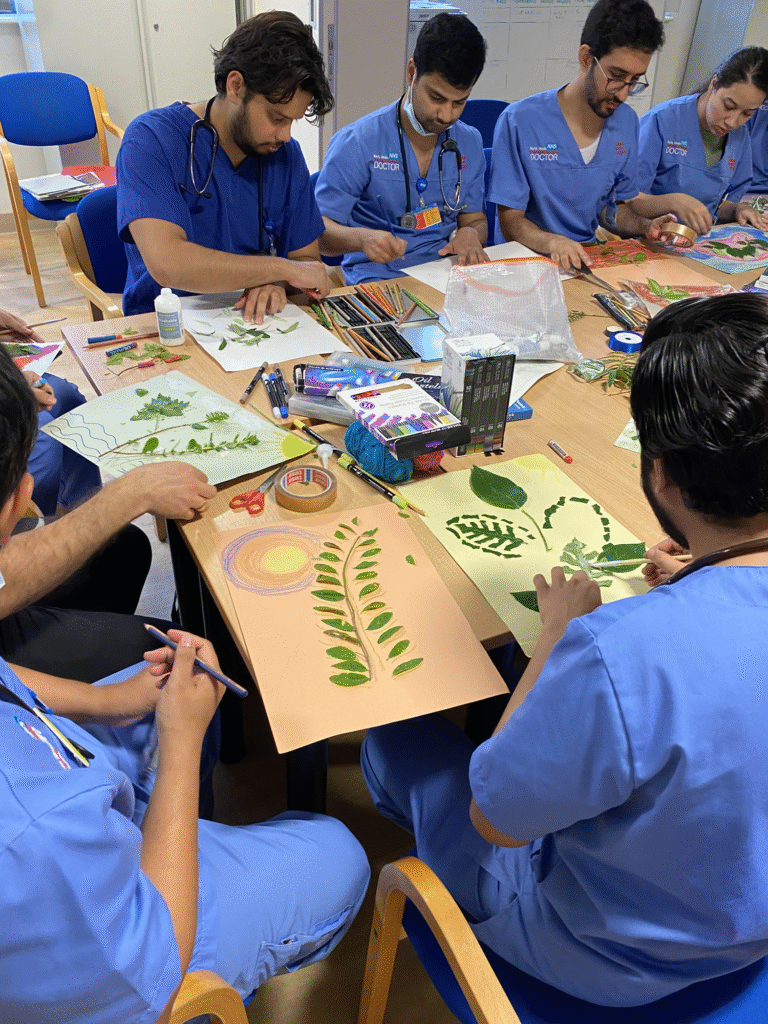
With a healthcare system under intense pressure, burnout and stress among NHS clinical staff has become an increasingly serious concern.
In the 2024 NHS Staff Survey, over 41% of NHS staff reported feeling unwell due to work-related stress, and a 2024 Unison survey found that 31% of NHS staff took time off work due to mental health issues in the past year. As well as being damaging to the health and lives of clinicians, it can affect how long staff stay in roles, the care they are able to provide, and the long-term sustainability of services.
Against this backdrop, the research study published in BMJ Public Health explored whether group art therapy could support clinical healthcare workers at risk of burnout. While most psychological interventions, including CBT, have shown limited or no results in reducing signs of burnout in clinical staff, this study found encouraging evidence that group art therapy may offer meaningful support for healthcare staff.
What did the research find?
The research found that six weekly sessions of group art therapy could significantly reduce burnout risk and mental distress in health care professionals from different professional backgrounds, in acute hospital settings.
The trial was led by art therapist and researcher Megan Tjasink as part of her PhD at Queen Mary University of London, under the supervision of Professor Stefan Priebe and a multidisciplinary academic team. Conducted across four London NHS hospitals, it is the first randomised controlled trial of its kind to evaluate the impact of group art therapy on burnout in healthcare professionals. It involved 129 healthcare professionals at risk of burnout, coming from a range of disciplines – including doctors, nurses and allied health professionals.
Participants were randomly assigned either to receive a six-week group art therapy intervention immediately, or to join a waitlist control group. The art therapy intervention consisted of weekly 90-minute group sessions led by qualified art therapists.
Researchers found that participants who received group art therapy reported lower levels of emotional exhaustion (a core aspect of burnout) compared with the control group at the end of the programme. The study also identified improvements in stress, anxiety, depression and depersonalisation. It also found that the improvements were mostly sustained three month’s on.
What is particularly exciting about the research findings is that the benefits were not only individual. The intervention appeared to strengthen connection, psychological safety and reflection within groups, suggesting that art therapy may help support healthier healthcare cultures as well as individual wellbeing.
Megan Tjasink, chief investigator
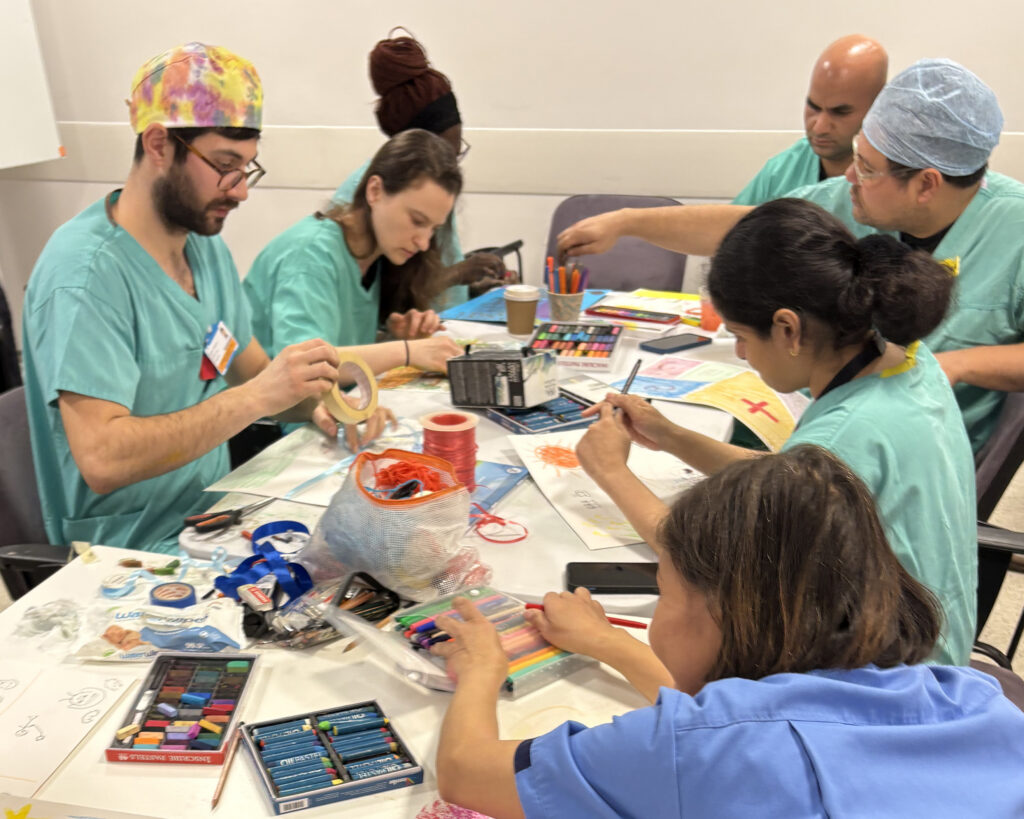
“Remember we are human again”: what clinicians said about the art therapy
Speaking to BBC London, participants described the sessions as offering a rare space for reflection, connection and emotional support within demanding healthcare environments:
Our shifts are so busy, but this gives us time to pause, to remember we are human again and to express our feelings through art.
Dr Umur Guven, oncologist, who attended sessions at St Bartholomew's Hospital
In these sessions when you find out others share the same feelings as you, you don’t feel alone anymore.
Dr Francesco Rosato
Of the participants who gave feedback on the art therapy groups all said they would recommend it to colleagues, 98% found the sessions ‘helpful’ or ‘very helpful’ and 97% thought that group reflective discussion was helped by the art making.
What made it successful?
The findings suggest that carefully implemented art therapy programmes could offer a valuable and distinctive form of support for healthcare teams experiencing high levels of stress.
As one therapist involved in the study reflected:
We offered something different that didn’t fit into the existing structure … the whole frame needed to be kind of changed.
Anonymous therapist from study, published in the International Journal of Art Therapy, 2026
However, the researchers also emphasised that the context of how the art therapy was carried out was likely very important to achieving the benefits the participants felt.
For any leader or organisation interested in embedding art therapy into staff wellbeing – here are a few of the takeaways.
Art therapy as a distinct intervention
The research looked at art therapy, rather than general arts-based or wellbeing activities. Art therapy is an established form of psychotherapy, delivered by trained art therapists (also known as art psychotherapists), registered with the HCPC. It uses art as the primary mode of expression, alongside talking with an art therapist.
There is a growing and important evidence base showing the value of arts and creative activity for health and wellbeing more broadly. However, this particular study focused specifically on art therapy groups facilitated by registered art therapists, and the findings should be understood within that context.
Led by specially trained art therapists
While qualified art therapists already bring significant skills and knowledge, the art therapists on this project were experienced art therapists, who had already worked within medical settings and received additional training in this specific group art therapy approach for the clinical context in which it was delivered. They were trained in the manualised CHArt intervention and received specialist supervision to support fidelity to the model.
The art therapy sessions were developed with clinical staff
The art therapy approach used in the study was adapted for healthcare staff working in acute settings.
Researchers developed the art therapy approach collaboratively with clinicians to ensure it reflected the realities of the workplace and ensure it felt psychologically safe for staff.
The art therapy sessions focused on present-day pressures and emotional support within a work environment, which likely increased demand for the sessions as they were meeting a genuine need among the staff.
Art therapists were embedded in the NHS team
The art therapists who delivered the intervention were embedded within services and worked collaboratively with senior clinicians and psychological support teams. The researchers say this approach validated the art therapy they were offering.
There needs to be institutional commitment
Therapists who worked on the trial stressed the importance of institutional commitment to ensure the programme is sustainable. As one therapist involved put it: “If there’s too much resistance in an organisation, it might not be the time to run it”
Part of a wider approach
Finally, the findings suggest that art therapy may offer support within a broader approach to staff wellbeing. It is not a solution to systemic issues, such as understaffing or excessive workload.
The UK government’s 10-Year Health Plan for the NHS explicitly aims to reduce staff burnout to record lows, and healthcare organisations have called for staff wellbeing to be foundational to any NHS reform. As part of a wider set of reforms, art therapy could play a role in offering meaningful, preventative support to help achieve this.
Learn more about this research at our annual conference