Working as an art therapist in child and adolescent mental health services (CAMHS)
Spotlight
InSight – Summer 2026 | NHS special
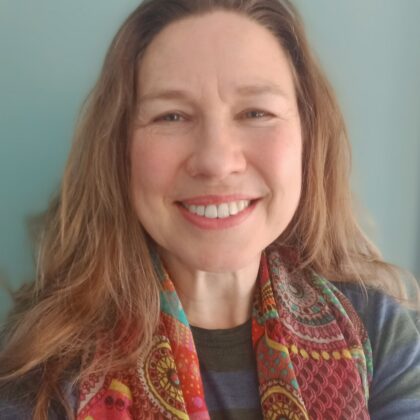
Spotlight is our regular series dedicated to shedding light on the roles of art therapists within different contexts. In this article, Tiffany Arnold tells us about her work in the NHS, in child and adolescent mental health services (CAMHS).
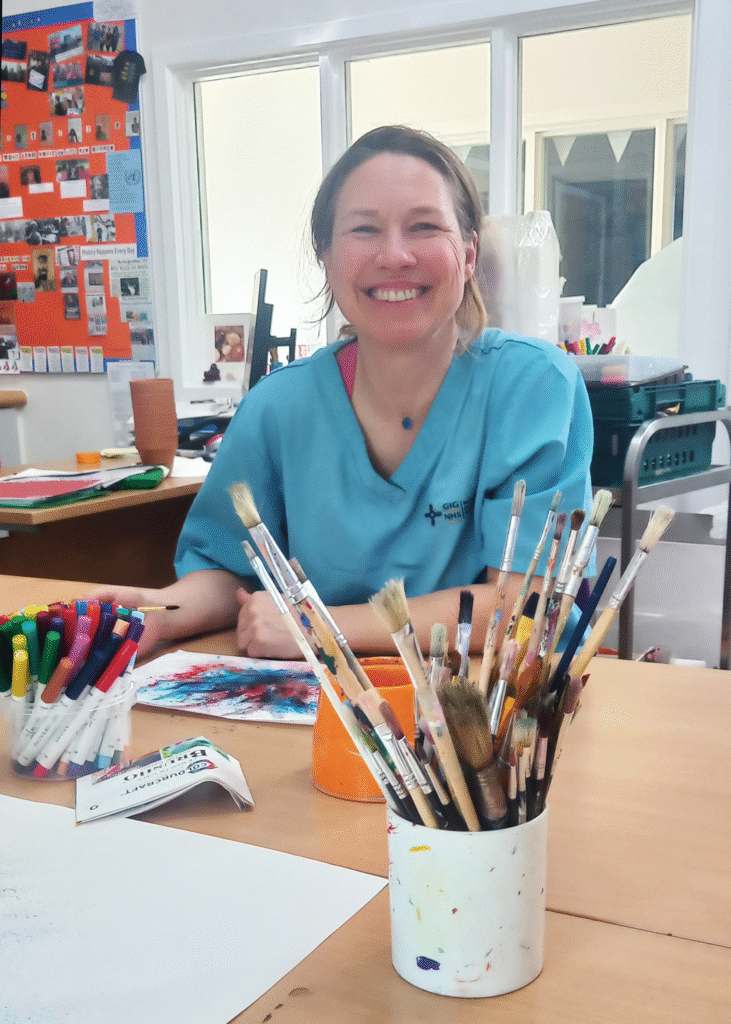 Who I am
Prior to qualifying as an art therapist, I gained experience in community mental health, youth work, and at a domestic abuse project. I was drawn to art therapy because it offered a balance between working with visual expression, language and reflective thinking, which felt well suited to my skills and interests.
Working creatively alongside children and young people offers a chance to make a meaningful difference early in people’s lives, helping to shape more positive trajectories.
Where I now work as an art therapist in North Wales, being able to communicate in people’s first language matters. I learned Welsh and became fluent, which means sessions are more accessible, especially for those who already struggle with verbal communication.
Where I work as an art therapist
I am a specialist art psychotherapist at the North Wales Adolescent Service (NWAS), an NHS CAMHS inpatient unit serving the whole of North Wales.
The young people I work with experience severe mental health difficulties: depression, self-harm and suicidality, eating disorders, trauma, emerging psychosis, and complex attachment difficulties. Many are neurodivergent, or have not responded to earlier support.
I am a trainer and co-ordinator for Adaptive Mentalization Based Integrative Treatment (AMBIT), which is being implemented as a whole team approach. This model aligns closely with art therapy in keeping the client at the heart of the process and promoting shared understanding across teams.
Leading a three-year co-production service improvement project also allowed me to apply art therapy skills at service level. Working together, staff and previous service users made real and lasting changes to team culture and processes, recognised nationally as a model of good practice.
In a stressful environment and uncertain political context, it feels important – as well as energising – to focus on what I can influence, and work positively toward meaningful change.
Getting here
After qualifying at the University of Sheffield in 2001, I helped establish an NSPCC post‑abuse therapy centre in Sheffield, which prepared me for my first NHS post in community CAMHS in Bangor, where I set up an art therapy service. Alongside this, I worked part‑time for the NSPCC in a school‑based service and later in an NHS adult medium secure forensic unit. The step up to inpatient work in 2012 was steep and there was a lot to learn.
To develop my practice, I trained in Dialectical Behavioural Therapy (DBT), Brief Solution Focused Therapy, and Mentalization Based Therapy (MBT). This enables fuller participation within the team, including formulation, decision-making, MBT-art therapy assessment, individual and group art therapy, and staff supervision.
Art therapists can gather subtle, complex information that may not otherwise be accessible.
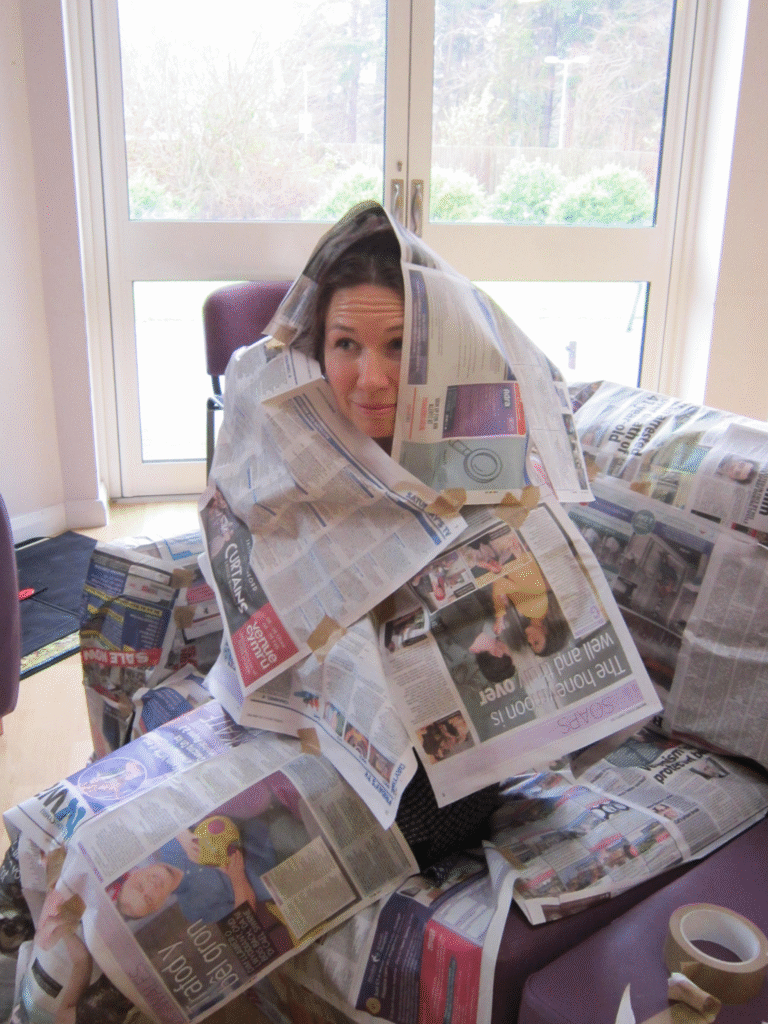
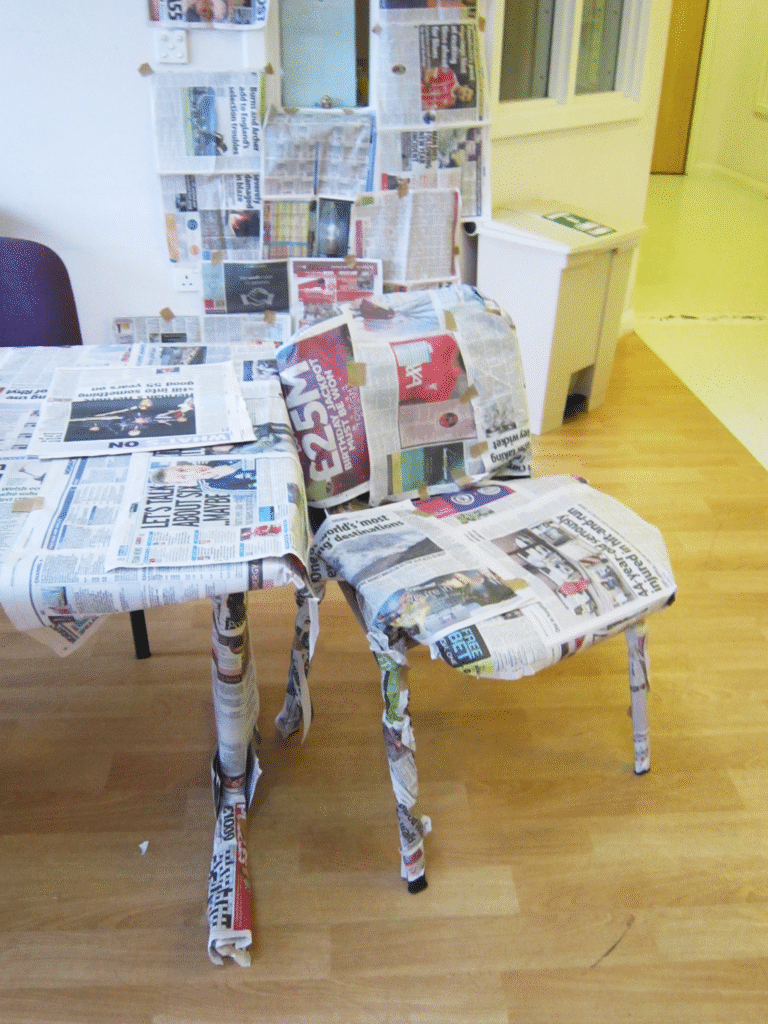
Image of artwork from group sessions: Working in a third person perspective, inspired by the artists Christo & Jeanne-Claude
A typical day at work
My day includes individual sessions, group work, meetings, and documentation. Art therapists can gather subtle, complex information that may not otherwise be accessible. Sharing observations supports team understanding of the young person, including feelings, thinking styles, relational patterns and personal values.
Art therapists bring valuable vision and skills strategically and at every level of a service, not just in the therapy room.
In one‑to‑one sessions I may work with young people who struggle to connect with thoughts and feelings and find hospital overwhelming. Art materials can offer a way to communicate and make sense of experiences when words feel difficult. Groups provide a relational focus and can be a gentle introduction to therapy.
The highlights can be quiet. The challenges are real. Supporting engagement for young people in crisis takes sustained energy, but brief moments of connection feel significant, and can grow over time. Meaningful therapeutic change does happen, even when circumstances seem bleak.
What I love about what I do
Helping people communicate and get their voice heard matters to me. It’s always a privilege to hear someone’s story, walk alongside them for a time, and support the positive movement that the children and young people talk about in their feedback:
I was trapped inside myself and only able to let feelings out through unhelpful ways. I discovered a new way to express myself – through art. I can draw some positivity even if I’m not feeling or thinking positively, there is a tiny part in me that’s able to do it, and I allow that… I can’t stand saying my thoughts and feelings. It’s so awkward and embarrassing. Art is a way for you to show others how you feel without having to open your mouth… It was nice to do something positive that I was actually comfortable with. If you weren’t having a good day there was always something manageable.
I have managed to find a way to express myself through art.
I have found new ways to cope with stuff without hurting myself.
I enjoy the breadth of this work and potential for positive change. I am not only a clinician, but also a trainer, supervisor, project leader, activist. Art therapists bring valuable vision and skills strategically and at every level of a service, not just in the therapy room.
How I look after myself in my role
Working in inpatient CAMHS is emotionally demanding, and I take supervision seriously. Also, I value supportive colleagues and great group co-facilitators. Without these elements, the work would not be sustainable.
Professional development is important, as career progression remains challenging for art, drama and music therapists wishing to retain a clinical focus. Continued development through CPD keeps the work fresh, relevant, focused and dynamic.
I believe strongly in maintaining a clear boundary between professional and personal life. Time outdoors walking, cycling, swimming, making creative work of my own, and connection with friends is essential.
What I wish I had known when I started
It has been important to understand what sits within my professional remit and to focus on what I can change or influence, whilst recognising what lies outside these spheres.
Art therapists often need to explain their role and demonstrate their value within teams, which can feel uncomfortable and create barriers to progression. Further training in evidence‑based models has enhanced the application of my role, though it remains essential to balance personal interests with team needs and strategic direction.
Moving forward
There is a growing evidence base for art therapy, but it remains under-resourced and, in some services, still undervalued. More art therapists working in CAMHS, contributing to research, supervision, and service development, will help change that.